



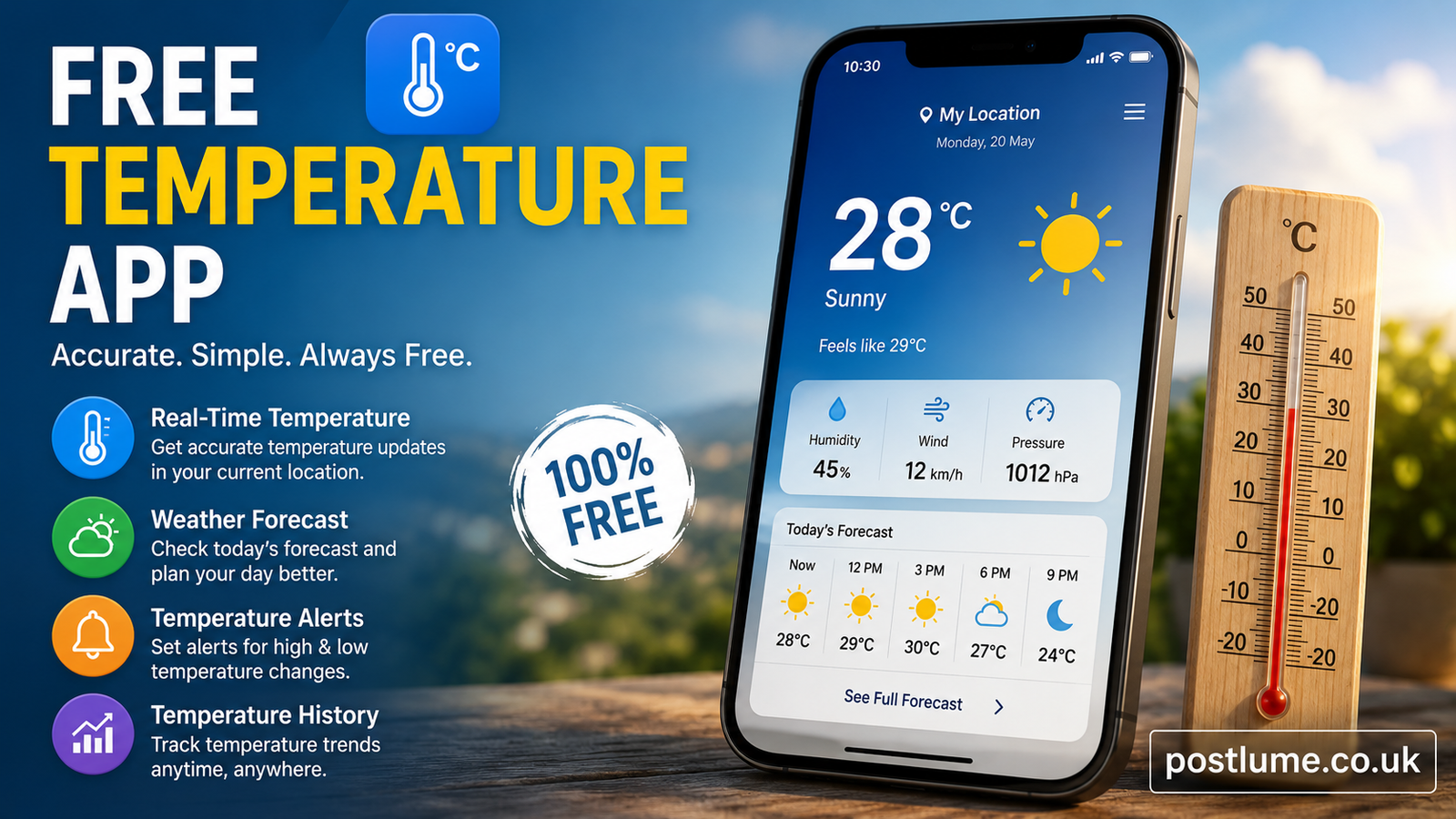
Have you ever stepped outside and wondered whether you really need a jacket, or checked the room temperature because it suddenly feels too warm? A free temperature app can make everyday temperature tracking much easier by putting useful information directly on your smartphone.
free temperature app can serve different purposes. Some focus on outdoor weather conditions, while others help monitor indoor environments or work alongside compatible temperature sensors. The important thing is understanding what an free temperature app can actually measure and choosing one that fits your needs.
In this guide, we will explore how free temperature app work, the features worth looking for, their practical benefits, common limitations, and how to choose the right option for everyday use.
What Is a Temperature App?
A free temperature app is a smartphone application designed to provide temperature-related information. Depending on the app, it may display outdoor air temperature, weather conditions, indoor readings from connected hardware, or other environmental data.
Many weather applications obtain outdoor temperature information from weather stations and forecasting services. Your phone then presents the information in an easy-to-read format, often alongside humidity, wind speed, precipitation, and forecast data.
However, there is an important distinction between weather temperature and body temperature.
A phone generally does not have a medical-grade thermometer built into it. An application cannot automatically turn an ordinary smartphone into a reliable clinical thermometer simply by being installed. If you need to measure someone’s body temperature accurately, a dedicated digital thermometer is usually the appropriate tool.
For environmental monitoring, however, smartphone apps can be extremely convenient.
How Does a Temperature App Work?
The technology behind temperature tracking depends on the type of application you use.
For outdoor weather information, an app usually relies on your location and data supplied by meteorological services or weather stations. After determining your location, the application can display the latest available temperature and forecast information for that area.
Some applications can also work with external devices. For example, a Bluetooth temperature sensor can collect readings from a room, refrigerator, greenhouse, storage area, or other location. The free temperature app acts as the dashboard where you can view those measurements.
Common data sources include:
- Local weather stations
- Meteorological databases
- GPS or location services
- Internet-based weather services
- Bluetooth temperature sensors
- Smart home monitoring devices
- Connected environmental sensors
This means that not every temperature app measures temperature directly. In many cases, it simply gives you convenient access to temperature data collected elsewhere.
Why Use a Free Temperature App?
The biggest advantage is convenience. Instead of searching through different websites or carrying a separate device everywhere, you can check useful temperature information from your phone.
For everyday weather checks, an app can answer simple questions quickly:
- Is it cold outside?
- Will the temperature rise this afternoon?
- Should I take a coat?
- Is the weather suitable for outdoor activities?
- How much will temperatures change overnight?
A good application can also provide additional information that makes the temperature reading more useful.
For instance, 20°C might feel comfortable on a calm, dry day but noticeably different when strong winds or high humidity are involved. That is why temperature should ideally be viewed alongside other weather conditions.
Key Features to Look For
Not all temperature applications offer the same experience. Some are extremely simple, while others provide detailed weather dashboards and historical information.
Current Temperature
The most basic feature is a clear display of the current temperature. Look for an app that makes this information easy to find without forcing you through multiple screens.
Hourly Forecast
An hourly weather forecast can be more useful than a single temperature reading. It shows how conditions may change throughout the day.
This is particularly helpful if you are planning a commute, outdoor event, workout, trip, or afternoon activity.
Daily Forecast
A multi-day forecast gives you a broader picture. Instead of checking your phone repeatedly, you can see expected temperature trends for upcoming days.
Feels-Like Temperature
The actual air temperature is not always the same as how the weather feels. Humidity and wind can affect perceived temperature, so a “feels like” reading can provide useful context.
Humidity Information
Humidity affects comfort significantly. High humidity can make warm weather feel heavier, while low humidity can make cooler conditions feel sharper.
Weather Alerts
Severe weather notifications can be useful when conditions are expected to change quickly. Depending on the service, alerts may cover storms, extreme heat, freezing conditions, heavy rain, or other weather events.
Location Support
If you travel regularly, choose an app that allows you to save multiple locations. You may want to monitor your home, workplace, another city, or a destination you are planning to visit.
Historical Data
Some advanced applications provide temperature history. This can be useful when comparing today’s conditions with previous days or identifying environmental patterns.
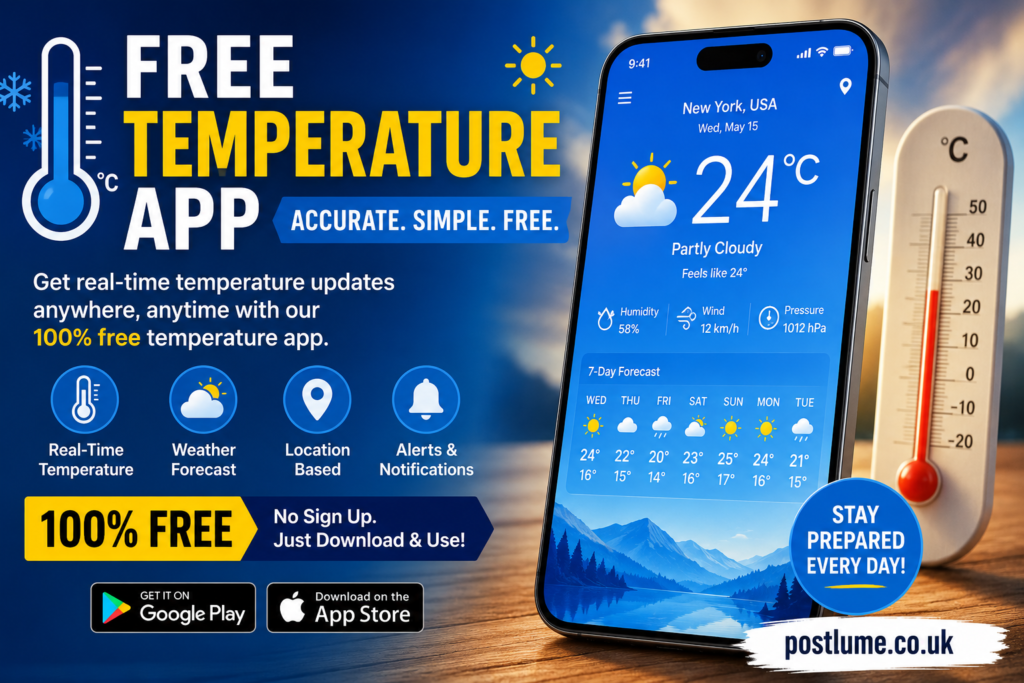
Free Temperature App vs. Dedicated Thermometer
One of the biggest misunderstandings surrounding temperature applications is assuming that every app can physically measure temperature.
A smartphone application and a thermometer are not necessarily the same thing.
| Feature | Temperature App | Dedicated Thermometer |
|---|---|---|
| Outdoor weather data | Usually available | Not always |
| Body temperature | Not reliably measured by most phones | Designed for this purpose |
| Weather forecast | Often available | Usually unavailable |
| Indoor temperature | May require a sensor | Usually available |
| Historical weather | Often available | Limited |
| Portability | Excellent | Excellent |
| Medical use | Generally unsuitable | Appropriate when designed for medical measurement |
If you simply want to know the weather outside, an application may be all you need. If you need an accurate physical measurement, use an appropriate thermometer or compatible temperature sensor.
Benefits for Everyday Users
Temperature information can be surprisingly useful in daily life.
Planning Your Day
Knowing the expected temperature helps you decide what to wear and whether outdoor activities make sense.
A morning temperature check can also help you prepare for changes later in the day. A cool morning does not necessarily mean the afternoon will stay cool.
Travel Planning
When traveling, temperature information becomes even more valuable. Conditions can be very different from what you are experiencing at home.
Checking the forecast before leaving helps you pack appropriately and prepare for changing conditions.
Outdoor Activities
Runners, cyclists, hikers, gardeners, and outdoor workers can benefit from regular weather monitoring.
Temperature is only one part of the equation, but it can help you decide when and where to spend time outside.
Home Comfort
Temperature and humidity information can help you understand why a room feels uncomfortable.
For more accurate indoor monitoring, however, a dedicated smart temperature sensor is preferable to relying on general outdoor weather data.
Benefits for Businesses
Temperature monitoring is not limited to personal use. Businesses can also benefit from accessible environmental information.
Restaurants, warehouses, offices, farms, greenhouses, retail stores, and storage facilities may all have reasons to monitor temperature.
For example, a business could use connected sensors to monitor an important storage area and receive notifications when conditions move outside a preferred range.
Potential business uses include:
- Office environment monitoring
- Warehouse temperature tracking
- Greenhouse management
- Equipment storage
- Smart building systems
- Agricultural monitoring
- Inventory protection
- Environmental reporting
The exact requirements depend on the business. In situations involving regulated storage, food safety, pharmaceuticals, laboratories, or sensitive equipment, professional monitoring equipment may be necessary rather than a basic smartphone application.
Can Your Phone Measure Room Temperature?
This depends heavily on the phone and the application.
Most smartphones are not designed to function as standalone room thermometers. Internal temperature sensors may exist for monitoring the device’s own hardware, but that does not mean they can accurately measure the surrounding air.
For reliable indoor temperature readings, an external sensor is usually a better solution.
A Bluetooth or Wi-Fi temperature sensor can communicate with a smartphone application and provide measurements from the actual environment.
This approach is especially useful for:
- Bedrooms
- Baby rooms
- Offices
- Greenhouses
- Server rooms
- Storage spaces
- Pet areas
- Refrigeration environments
The app becomes the interface, while the physical sensor does the measuring.
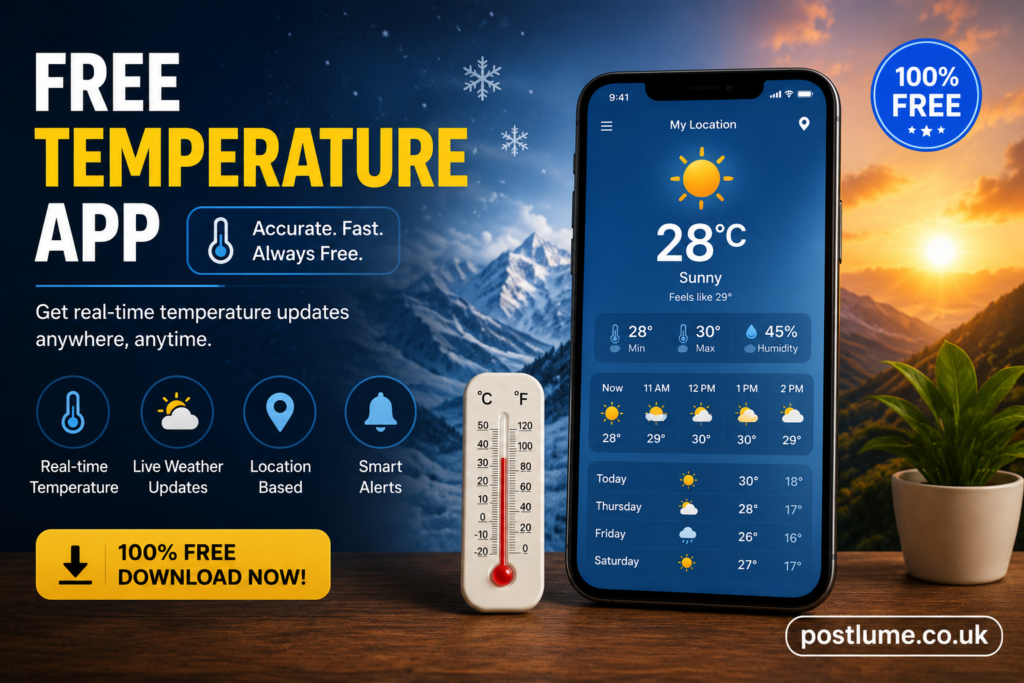
How Accurate Are Temperature Apps?
Accuracy varies depending on the source of the data.
A weather application may provide a temperature estimate based on nearby weather stations, forecast models, and location information. That reading may not exactly match the temperature outside your front door.
Why?
Weather stations can be several miles away. Buildings, pavement, vegetation, elevation, and local geography can all influence temperature.
For general purposes, this level of accuracy is often perfectly acceptable. You probably do not need laboratory-level precision to decide whether to wear a sweater.
However, precision becomes much more important in professional or sensitive environments.
If exact measurements matter, look for an application that works with a calibrated external sensor.
How to Choose the Right App
Before installing an application, think about what you actually want to accomplish.
If your goal is simply checking the weather, prioritize simplicity and reliable forecast information.
If you want indoor monitoring, look for compatibility with external temperature sensors.
If you need detailed weather analysis, consider features such as radar, historical weather, hourly forecasts, humidity, wind speed, and severe weather alerts.
A useful checklist includes:
- Clear temperature display
- Reliable data source
- Frequent updates
- Location support
- Forecast information
- Humidity readings
- Weather alerts
- Sensor compatibility when needed
- Easy-to-use interface
- Reasonable privacy settings
There is little value in an application packed with features you never use. The best option is usually the one that provides the information you need without making basic tasks unnecessarily complicated.
Privacy and Location Permissions
Weather applications often request access to your location. This can be useful because accurate local weather information depends on knowing where you are.
Still, it is worth reviewing app permissions before accepting them.
Ask yourself whether the application needs continuous location access or whether access only while using the app is sufficient.
You should also review privacy information and understand what data the application collects.
A simple weather tool should not require more personal information than necessary for its basic purpose.
Common Mistakes to Avoid
Choosing an application based only on the word “free” can sometimes lead to a poor experience.
Some free apps may contain aggressive advertising, unnecessary permissions, confusing interfaces, or features locked behind subscriptions.
Another common mistake is assuming that a smartphone can replace every type of thermometer.
It cannot.
An app that displays outdoor weather information is not automatically capable of measuring body temperature or accurately measuring indoor air temperature.
Finally, avoid treating a single weather reading as absolute truth. Temperature varies by location and can change throughout the day.
Tips for Getting Better Temperature Information
You can make temperature tracking more useful with a few simple habits.
First, enable location services when accurate local weather is important. Second, check the hourly forecast rather than relying only on the current reading.
It is also helpful to look at humidity and wind conditions. These factors can dramatically change how comfortable a particular temperature feels.
For indoor monitoring, place an external sensor away from direct sunlight, heaters, air conditioners, windows, and other sources of artificial temperature changes.
If you’re tracking conditions over time, keep the sensor in the same general location. Consistency makes your measurements more useful.
Is a Free Temperature App Worth Using?
For everyday weather information, absolutely. A smartphone application can be one of the quickest ways to check current conditions and plan around upcoming temperature changes.
The key is understanding its purpose.
A weather application is excellent for checking outdoor conditions, forecasts, humidity, wind, and weather alerts. An application connected to a physical sensor can be useful for monitoring indoor environments.
However, neither should automatically be treated as a replacement for professional equipment when accurate measurements are essential.
The right tool depends on the job.
Frequently Asked Questions
What is the best free temperature app?
The best option depends on what you need. For everyday weather checking, look for an app with reliable local data, current temperatures, hourly forecasts, humidity, and weather alerts.
Can a free temperature app measure body temperature?
Most ordinary smartphone applications cannot reliably measure human body temperature without compatible hardware. For health-related temperature measurements, use a suitable digital thermometer.
Can my phone measure outdoor temperature?
Your phone can display outdoor temperature information using weather data and location services. That does not necessarily mean the phone itself is measuring the outdoor air.
Can an app measure room temperature?
A smartphone application may display room temperature when paired with a compatible external temperature sensor. Without additional hardware, accuracy may be limited or unavailable.
How often should temperature data update?
For general weather use, frequent updates are useful, especially when conditions are changing. The exact update interval depends on the application and its data provider.
Are temperature apps accurate?
They can be accurate enough for everyday weather decisions, but readings may differ from the exact temperature at your location. Professional applications may require dedicated calibrated sensors.
Do temperature apps use GPS?
Many weather applications use GPS or other location services to identify your approximate location and provide relevant local weather information.
Can temperature apps work without internet?
Some applications may retain previously downloaded information, but live weather updates generally require an internet connection or another data source.
Are free temperature apps really free?
Some applications provide core features without payment but may include advertisements or optional premium features. Always check the app’s pricing and subscription details before signing up.
Conclusion
A free temperature app can be a convenient everyday tool for checking weather conditions, planning activities, monitoring forecasts, and understanding how temperature changes throughout the day. The best choice depends on whether you need simple outdoor weather information or more advanced monitoring through external sensors.
Before choosing an app, consider accuracy, data sources, location features, privacy, alerts, and ease of use. Most importantly, understand the difference between displaying weather information and physically measuring temperature.
For everyday decisions, a reliable temperature application can save time and keep you better prepared. Explore your options, choose an app that matches your needs, and use the information alongside humidity, wind, and forecast data for a more complete picture of the conditions around you.
