



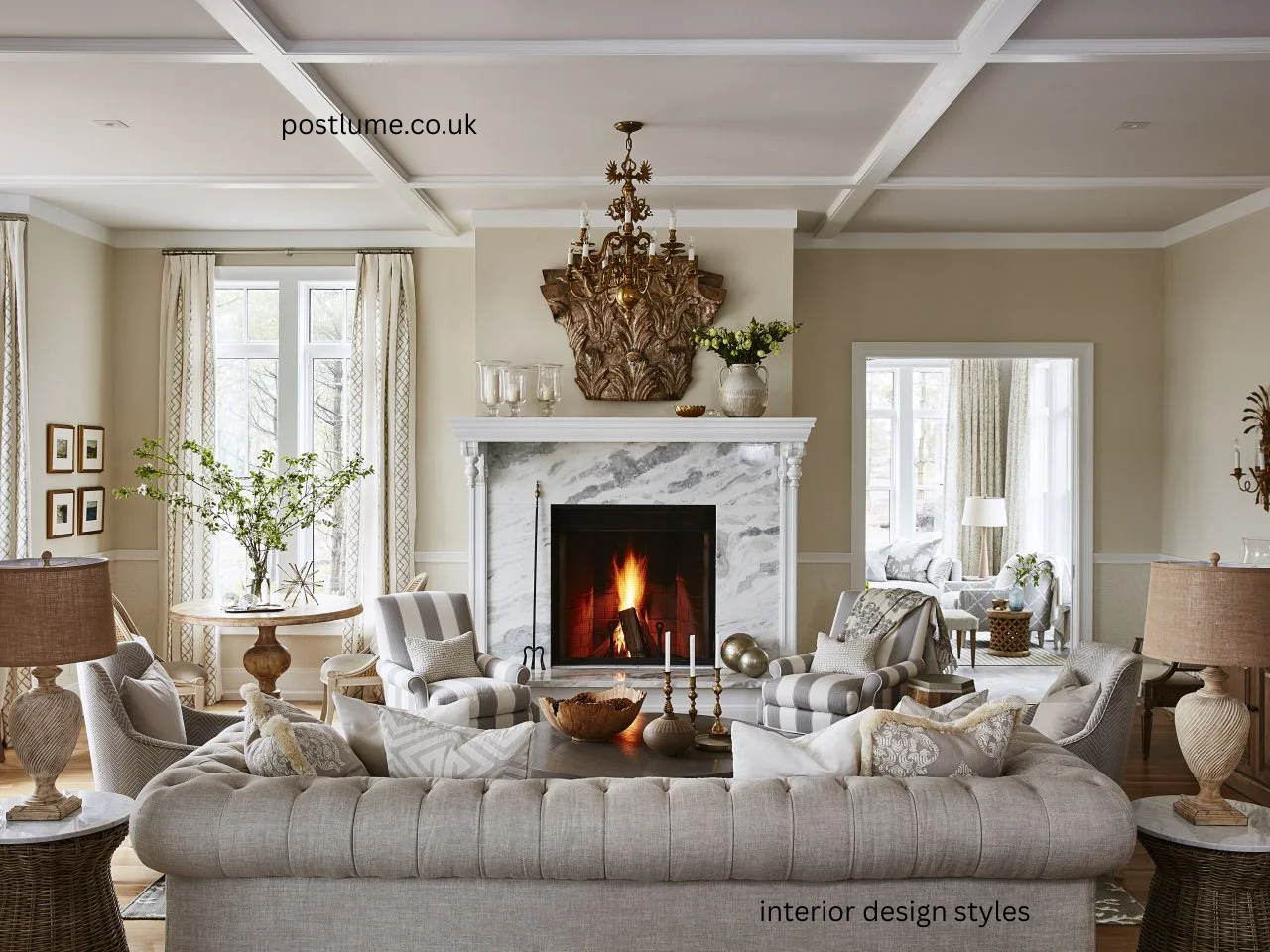
If you’ve ever stood in your living room wondering why it doesn’t feel finished — even though every piece in it is technically “nice” — the missing ingredient is usually a style. A defined style gives every future purchase a reason to belong in the room, instead of adding one more thing that doesn’t quite match.
This guide breaks down 20 interior design styles, what defines each one, which rooms and homes they suit best, and how to start applying one without a full renovation budget.
What Is an Interior Design Style?
An interior design style is a consistent set of choices — color palette, materials, furniture shapes, and decorative details — that repeats throughout a space so it reads as intentional rather than random. A interior design styles isn’t a rulebook; it’s a reference point. Once you know yours, decisions get faster: you know what to buy, what to skip, and what to return.
How to Find Your Interior Design Style
Before you commit to paint colors or furniture, answer three questions:
- What draws your eye first — clean lines and neutral tones, or pattern, color, and texture?
- What’s your ideal mood — calm and uncluttered, cozy and lived-in, or bold and expressive?
- What era do you gravitate toward — the sleekness of the last decade, mid-century shapes, or something older and more traditional?
Most people land closer to one end of these spectrums than they expect. The 20 styles below are grouped loosely from clean and minimal to warm and traditional to bold and eclectic, so scan for where your answers point and start there.
20 Interior Design Styles, Explained
1. Minimalist
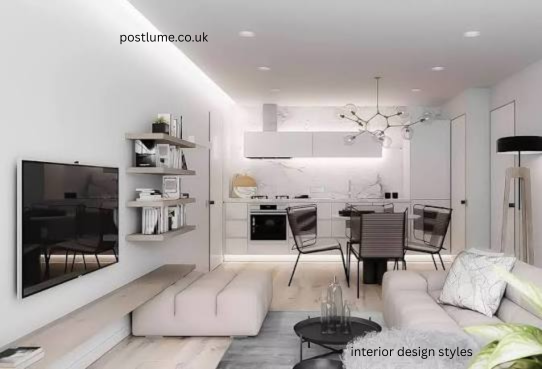
Minimalist interior design styles strips a room down to what it needs: clean lines, a tight neutral palette (usually white, gray, and black), and almost no ornamentation. Every object earns its place — nothing sits out purely for decoration.
Best for: Small apartments, home offices, anyone who finds clutter distracting rather than cozy.
Try this: Pick one accent color and use it in no more than two spots per room. Everything else stays neutral.
2. Contemporary
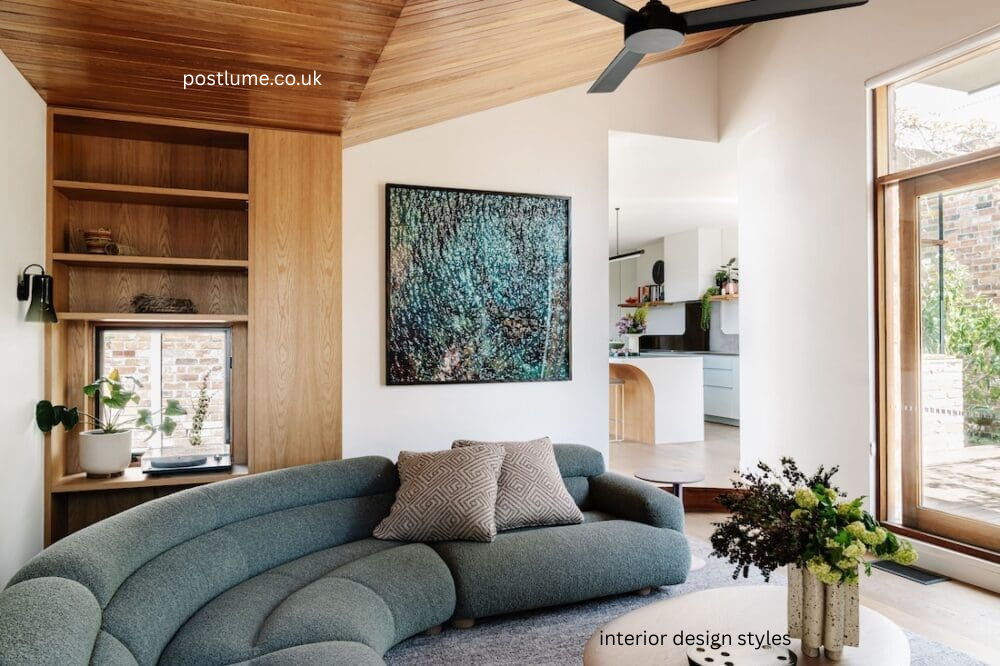
Contemporary interior design styles reflects what’s current right now, which means it shifts over time — but today it typically means curved furniture silhouettes, natural materials like oak and stone, and a warm-neutral palette instead of stark white. It’s minimalism’s more relaxed cousin.
Best for: People who want a modern look without it feeling cold or clinical.
Try this: Swap sharp-edged furniture for pieces with rounded corners — it’s the fastest way to shift a room from “modern” to “contemporary.”
3. Modern
Modern design refers specifically to the early-to-mid 20th century movement — think Bauhaus and the International Style — defined by function-first furniture, geometric shapes, and materials like chrome, glass, and molded plywood.
Best for: Fans of architectural furniture and design history, not just a general “clean” look.
Try this: Add one true modernist piece — a Barcelona chair or a tulip table replica — as an anchor rather than trying to make everything match the era.
4. Mid-Century Modern
A specific branch of modern interior design styles from the 1940s–1960s, defined by tapered wood legs, organic curved shapes, and a mix of warm wood tones with pops of mustard, teal, or burnt orange.
Best for: Living rooms and dens where you want warmth and personality without going traditional.
Try this: Start with one iconic silhouette — an Eames-style lounge chair or a sunburst mirror — rather than furnishing the whole room at once.
5. Traditional
Traditional design draws from 18th and 19th century European decor: symmetry, rich wood tones, classic silhouettes (wingback chairs, roll-arm sofas), and detailed millwork like crown molding.
Best for: Formal living and dining rooms, older homes with existing architectural detail.
Try this: Pair symmetrical furniture arrangements with a matching set of lamps or vases on either side of a mantel or console.
6. Transitional
Transitional interior design styles sits between traditional and contemporary — classic furniture shapes with simpler lines, a neutral palette, and fewer ornate details than full traditional style. It’s the most common style in new-build homes because it ages well and rarely feels dated.
Best for: People who want warmth and structure without committing to a strong aesthetic in either direction.
Try this: Choose one traditional element (a curved-arm sofa) and pair it with one modern one (a glass or metal coffee table).
7. Eclectic
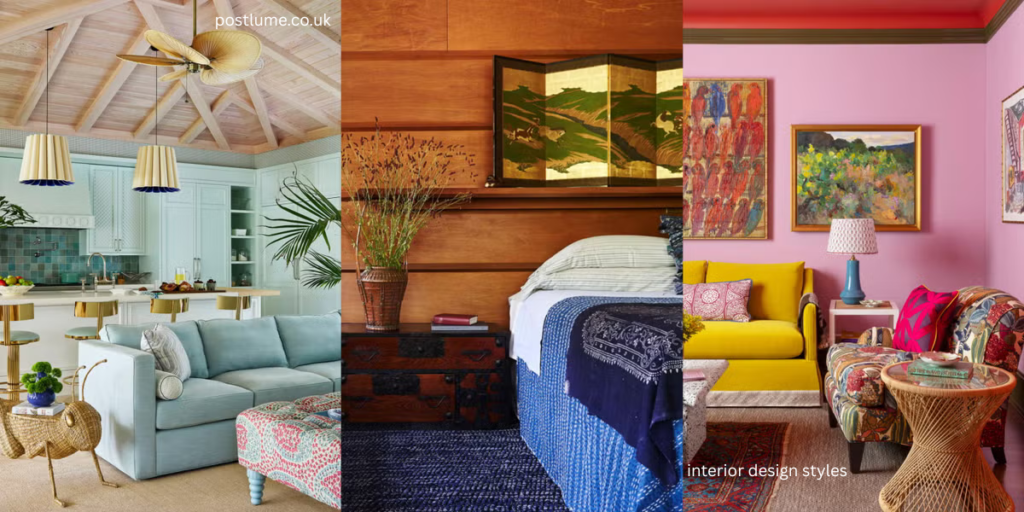
Eclectic interior design styles intentionally mixes eras, patterns, and origins — a vintage rug, a modern sofa, and inherited art can all coexist — but it’s held together by a consistent color story or a recurring material, not left to chance.
Best for: Collectors, frequent travelers, and anyone with sentimental pieces they don’t want to part with.
Try this: Pick two or three colors that repeat across every piece, no matter how different the styles are. That repetition is what keeps eclectic from reading as messy.
8. Industrial
Industrial design borrows from old factories and warehouses: exposed brick, black metal fixtures, raw or reclaimed wood, and visible ductwork or piping left intentionally unfinished.
Best for: Loft apartments, converted warehouses, or any space with existing exposed structural elements.
Try this: If your walls and ceilings are drywall, bring industrial in through furniture instead — a metal-frame shelving unit or pipe-style light fixtures do the work.
9. Scandinavian
Scandinavian design favors light woods, white and soft gray walls, and minimal decoration, with an emphasis on natural light and functional furniture. Texture — wool throws, sheepskin, woven baskets — replaces color as the main source of warmth.
Best for: Rooms with good natural light, cold climates where coziness matters as much as looks.
Try this: Layer at least two different textures (a chunky knit throw plus a woven jute rug) to avoid the style reading as sparse.
10. Japandi
A blend of Japanese minimalism and Scandinavian warmth: low-profile furniture, natural materials, muted earth tones, and an emphasis on craftsmanship over decoration. Rooms feel calm, uncluttered, and deliberate.
Best for: Bedrooms and living rooms where the goal is a sense of quiet rather than visual excitement.
Try this: Choose furniture with visible wood grain and low, horizontal lines — a platform bed frame is the easiest entry point.
11. Bohemian
Bohemian (“boho”) design layers pattern, color, and texture freely — think macramé, rattan, vintage textiles, and abundant plants — with a relaxed, collected-over-time feel rather than a matched set.
Best for: Renters and first apartments, since most boho pieces are affordable and easy to swap out.
Try this: Layer two or three patterned textiles (rug, throw pillows, wall hanging) in a shared color family so the mix feels curated instead of chaotic.
12. Farmhouse
Farmhouse design combines rustic materials — shiplap, distressed wood, wrought iron — with a light, mostly white or cream palette. It reads as country-inspired but tidy rather than rustic and rough.
Best for: Kitchens and dining rooms, homes with existing wood beams or barn-style architecture.
Try this: A single shiplap accent wall or open wood shelving delivers the look without a full remodel.
13. Rustic
Rustic design leans further into raw, natural materials than farmhouse does — exposed wood beams, stone, and rough-hewn furniture with visible texture and imperfections left on display.
Best for: Cabins, mountain homes, and spaces where you want warmth over polish.
Try this: Choose one statement wood piece — a live-edge table or a reclaimed wood headboard — and keep the rest of the room simple around it.
14. French Country
French Country design blends rustic warmth with a touch of elegance: soft, muted color palettes (lavender, cream, sage), curved wood furniture, toile or floral fabrics, and wrought iron details.
Best for: Bedrooms and dining rooms where you want charm without full-on traditional formality.
Try this: Introduce one floral or toile fabric — a set of curtains or a chair cushion — rather than covering every surface in pattern.
15. Coastal
Coastal design uses a light, breezy palette (white, sandy beige, ocean blue) with natural textures like rattan, linen, and light wood. It’s meant to evoke a beach house without leaning into literal nautical decor.
Best for: Sunrooms, bedrooms, and homes near water — but works anywhere you want a light, airy feel.
Try this: Skip the anchors and starfish. A linen sofa, a jute rug, and rattan light fixtures deliver the mood far more effectively than literal beach props.
16. Mediterranean
Mediterranean design draws from coastal Italy, Spain, and Greece: warm terracotta and stucco tones, wrought iron detailing, textured plaster walls, and hand-painted tile accents.
Best for: Homes with architectural features like arched doorways or stucco exteriors, sun-drenched climates.
Try this: Add hand-painted or patterned tile in a small dose — a backsplash strip or a tray — rather than tiling an entire surface.
17. Art Deco
Art Deco design comes from the 1920s–30s: bold geometric patterns, rich jewel tones, glossy black and gold finishes, and dramatic, symmetrical layouts.
Best for: Powder rooms, entryways, and anyone who wants a glamorous, high-contrast statement space.
Try this: Introduce Art Deco through one dramatic piece — a sunburst mirror, a velvet accent chair, or geometric-patterned wallpaper — rather than the whole room.
18. Hollywood Regency
Hollywood Regency design channels old-Hollywood glamour: high-gloss finishes, mirrored furniture, bold color combinations, and luxe fabrics like velvet and silk.
Best for: Bedrooms, dressing rooms, or any space meant to feel a little indulgent.
Try this: A mirrored side table or a velvet headboard introduces the glamour without requiring a full redesign.
19. Biophilic
Biophilic design centers on the connection between people and nature: abundant plants, natural light, organic materials (wood, stone, rattan), and layouts that draw the eye toward windows and greenery.
Best for: Home offices and living rooms, especially for people who work from home and want a calming environment.
Try this: Group plants of varying heights near your main window rather than scattering single pots around the room — clustering reads more intentional and has a stronger visual impact.
20. Maximalist
Maximalist design is the deliberate opposite of minimalism: bold colors, layered patterns, gallery walls, and collections displayed rather than hidden. Done well, it still follows an underlying color or thematic logic — it’s abundant, not random.
Best for: People who find neutral rooms boring and want their space to reflect a strong personality.
Try this: Start with a bold wallpaper or paint color on one wall, then build patterns and colors outward from it so the room has a consistent thread to follow.
Interior Design Styles by Room
Living Room
Living rooms benefit from styles that hold up to daily use and conversation — Transitional, Mid-Century Modern, and Contemporary are the most practical starting points, since their furniture tends to be comfortable as well as good-looking.
Bedroom
Bedrooms lean well toward calmer styles: Japandi, Scandinavian, and French Country all prioritize a restful mood over visual excitement, which matters more in a room built for sleep.
Kitchen
Farmhouse and Contemporary dominate kitchen design for good reason — both photograph well and hold up structurally, since kitchen finishes need to survive heavy daily use, not just look good on day one.
Home Office
Biophilic and Minimalist styles suit home offices particularly well: fewer visual distractions and more natural light both correlate with better focus, which matters more here than in any other room in the house.
How to Combine Two Interior Design Styles
Almost no real home commits to a single style with zero deviation — most successful spaces blend two, and a few pairings work especially well together:
- Scandinavian + Bohemian — clean Scandinavian furniture as the base, with boho textiles and plants layered on top for warmth.
- Industrial + Mid-Century Modern — raw industrial materials (brick, black metal) paired with warm wood mid-century furniture to soften the edge.
- Traditional + Contemporary — classic furniture silhouettes with a simplified, neutral palette (this pairing is essentially what defines Transitional style).
- Coastal + Mediterranean — a light coastal palette with Mediterranean texture (plaster, tile) for warmth without heaviness.
The rule that keeps any combination from feeling disjointed: let one style lead (roughly 70% of the room) and use the second as an accent (30%), rather than splitting evenly.
Interior Design Styles FAQ
What’s the difference between traditional and transitional style? Traditional style uses ornate, classic furniture with ornamental details like carved wood and rich color. Transitional style takes those same classic shapes but simplifies them — fewer details, a more neutral palette — landing between traditional and contemporary.
What’s the most popular interior design style right now? Transitional and Contemporary consistently rank as the most searched and most applied styles, largely because they’re neutral enough to resell well and flexible enough to update over time without a full redo.
Can you mix interior design styles? Yes — most well-designed rooms blend two styles rather than committing fully to one. The key is letting one style dominate (around 70% of the room) while the second acts as an accent, and keeping a consistent color palette across both.
How do I identify my interior design style? Look at what you’re already drawn to — save images of rooms you like and look for repeated patterns in color, furniture shape, and material. If most of your saved images lean toward clean lines and neutral tones, you likely lean minimalist or contemporary. If they lean toward pattern, color, and collected objects, you likely lean bohemian or maximalist.
Do I need to pick just one style? No. Very few real homes commit to a single style throughout. It’s more useful to think of a style as a starting direction than a strict rule you can’t break.
Final Thoughts: Choosing a Style That Fits You
The goal of naming your interior design styles isn’t to box yourself in — it’s to make decorating decisions faster and cheaper, because you stop buying things that don’t belong together. Start with one room, pick the style that matches how you actually answered the questions above, and let the rest of the house follow at its own pace.
