



If you’ve searched “green goblin costume” and landed on a page of fifty random Etsy listings with no context, you’ve probably noticed the problem: nobody tells you which Green Goblin you’re even looking at, whether the mask is comfortable to wear for six hours of trick-or-treating, or how to build one yourself if you’d rather not spend $200.
This guide covers all of it — the different versions of the character, where to buy a costume that actually looks good, how to build your own from scratch, and the small details (mask visibility, sizing, fabric choice) that separate a costume you’ll wear proudly from one you’ll regret by 8pm.
Quick Answer: Best Green Goblin Costumes at a Glance
- Best overall: A premium foam-latex mask paired with a molded chest and shoulder armor set, worn over a green base bodysuit
- Best budget: A printed bodysuit with a lightweight fabric mask — gets the color and silhouette right without the cost of custom armor
- Best for DIY builders: 3D-printed armor STL files plus a hand-painted latex mask
- Best for kids: A soft, breathable jumpsuit with a felt or foam mask that doesn’t restrict vision or airflow
- Best mask only (if building the rest yourself): A latex character mask with pre-cut eye holes and a foam-backed interior for comfort
We’ll go through the reasoning behind each of these picks below, along with links and specifics.
Which Green Goblin Are You Going For?
Before buying or building anything, it helps to know which version of the character you’re actually recreating. This is the single most common mistake people make — mixing pieces from different eras and ending up with a costume that doesn’t read as a coherent look.
Willem Dafoe / Raimi Trilogy Goblin (2002)
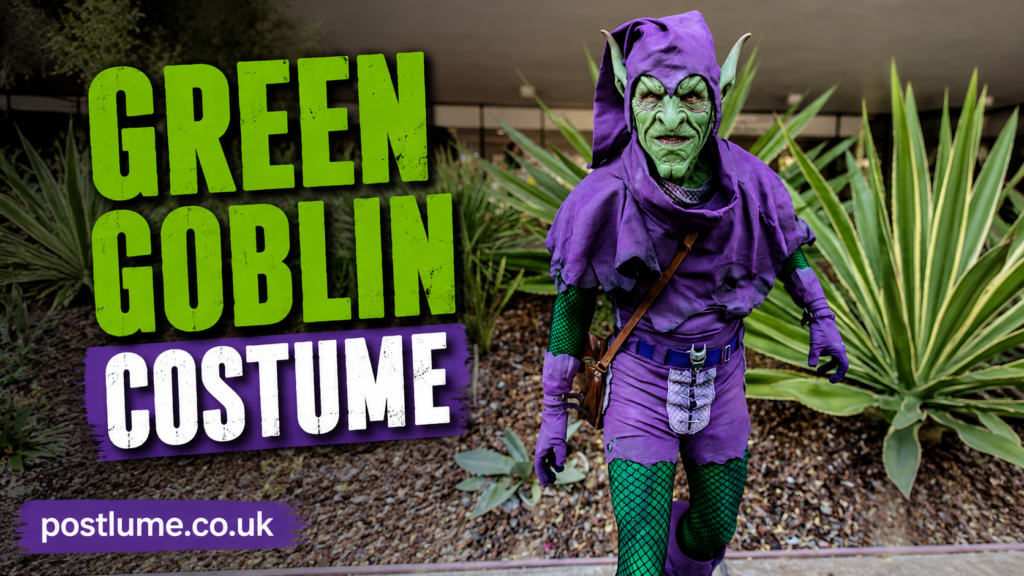
This is the version most people picture first: a full molded mask-helmet (not a half-mask), heavy green-and-purple body armor, and a distinct medieval-warrior-meets-insect silhouette. It’s the hardest version to build from scratch because of the armor complexity, but it’s also the most recognizable and the one that photographs best for conventions.
MCU Goblin (Spider-Man: No Way Home, 2021)
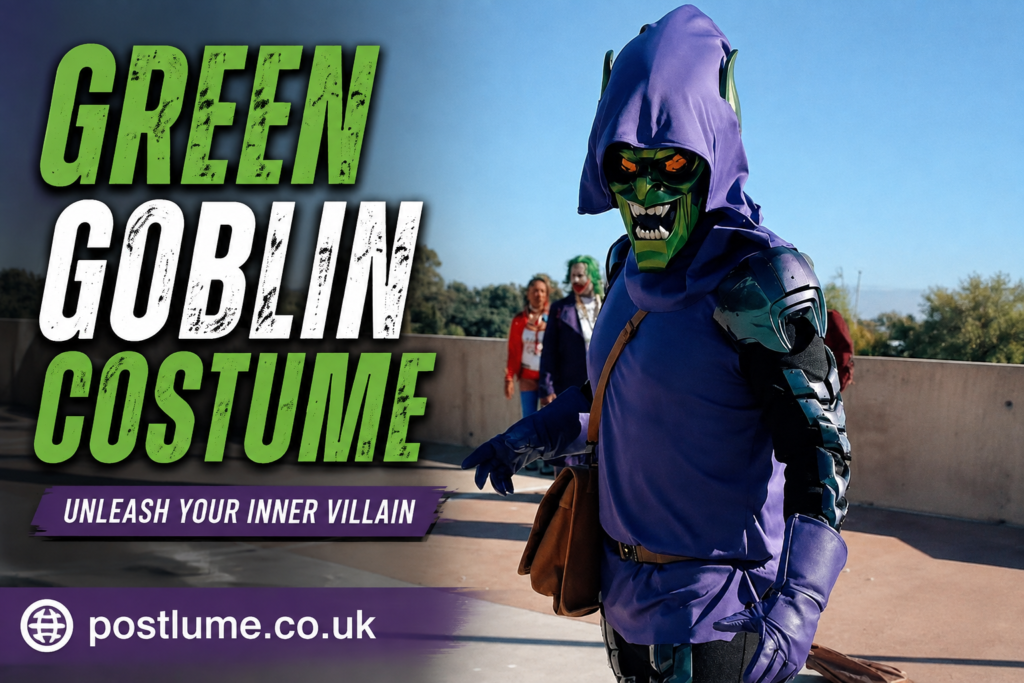
A sleeker, more armor-plated redesign — less “molded rubber suit,” more tactical/mechanical. The mask has a more angular, glider-pilot look. This version is popular with cosplayers who want something modern and slightly easier to 3D print in segments.
Classic Comic Goblin
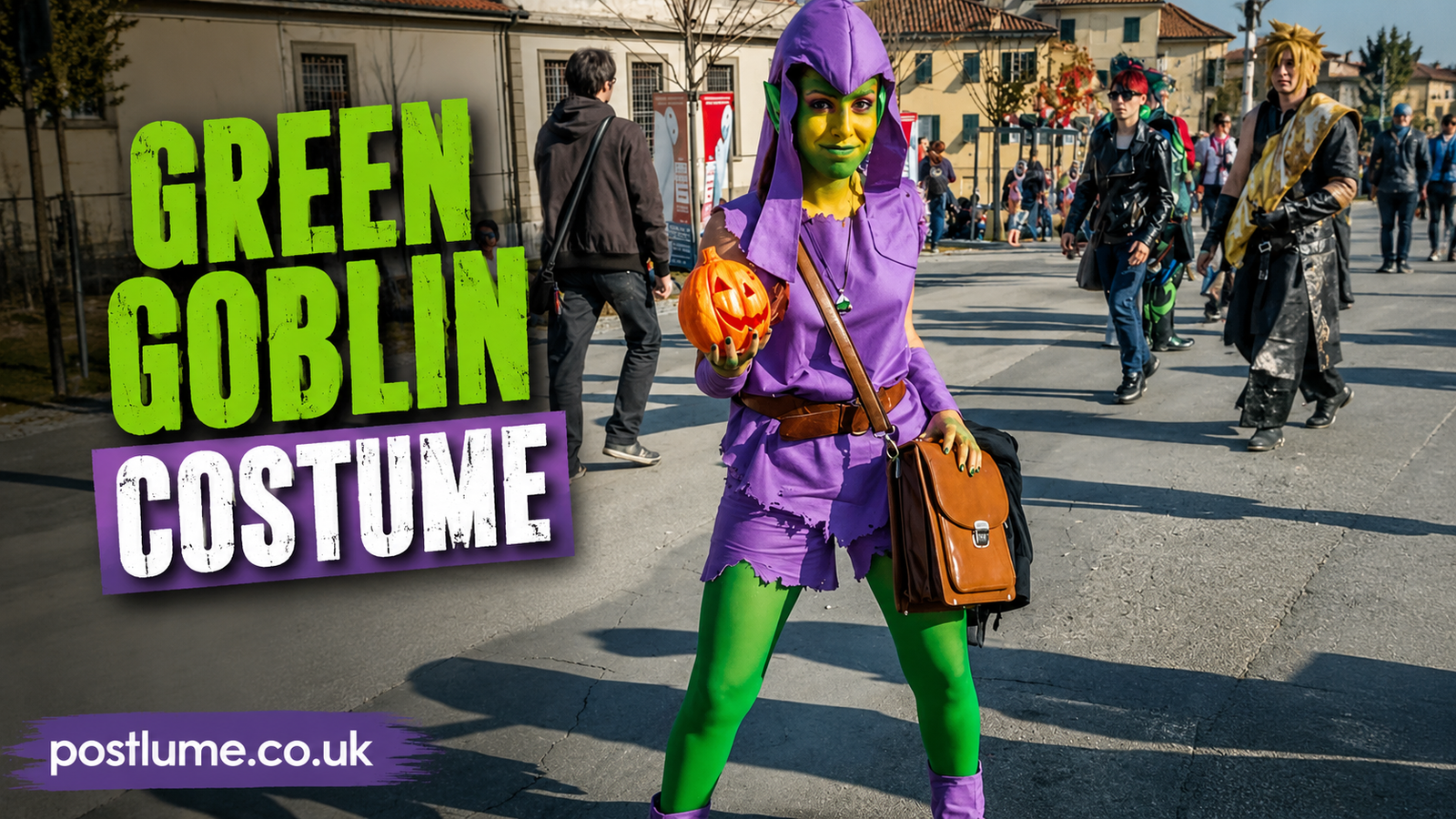
Brighter, more saturated green and purple, a more expressive mask with a wider grin, and a simpler costume structure overall — closer to a supervillain jumpsuit than heavy armor. This is usually the easiest and cheapest version to put together, and it’s a solid choice if you want something comic-accurate without a huge build project.
Kid-Friendly Goblin
Softer color palette, no exposed “skin” texture on the mask, and safety-first construction (no small detachable parts, breathable fabric). Most costumes marketed for children fall into this category regardless of which movie or comic version they’re loosely based on.
Bottom line: if you want screen accuracy, pick one version and stick to it for every piece — mask, suit, gloves, boots. Mixing eras is the fastest way to make a costume look like a costume instead of a character.
Best Green Goblin Costumes You Can Buy
Best Premium / Movie-Accurate Pick
Look for sets that include a full helmet-style mask (not a half mask) with a separate chest and shoulder armor piece. These typically run higher in price because the armor is molded rather than printed fabric, but the payoff is a costume that holds its shape and looks convincing in photos from any angle. Check reviews specifically for mentions of weight and heat — armor sets can get warm fast at an evening event.
Best Budget Pick
A one-piece printed bodysuit with a separate fabric or foam mask gets you 80% of the visual impact for a fraction of the cost. The trade-off is texture — printed fabric reads as flat compared to molded armor up close, but it photographs perfectly fine from normal distance and is far more comfortable for a full night out.
Best Kids’ Costume
Prioritize costumes explicitly labeled with breathable mesh eye and mouth areas on the mask, and stretch fabric bodysuits rather than rigid armor pieces. Kids overheat faster than adults in costumes, and a mask that restricts peripheral vision is a real safety issue for trick-or-treating after dark.
Best Mask Only
If you already own a base bodysuit or plan to build your own armor, a standalone latex or foam mask is the most cost-effective way to nail the face without committing to a full set. Look for one with a foam-lined interior — bare latex against skin for hours gets uncomfortable fast, and lining also helps with sweat.
Best Plus-Size Option
Search specifically for “custom fit” or “made to order” listings rather than fixed-size retail costumes, particularly for the Raimi-style armor look — most fixed-size mass-market suits are cut for a narrow size range, and a custom or made-to-order build will fit properly and look far better in photos.
How to Build Your Own Green Goblin Costume
Buying a full costume is faster, but building your own gives you control over accuracy, fit, and cost — and for a character with as much surface detail as Green Goblin, a DIY build can genuinely outperform a mass-produced one.
What You’ll Need
- A green base bodysuit or zentai suit (this is your canvas — everything else layers on top)
- Armor pieces — either 3D printed, EVA foam, or thermoplastic (Worbla), depending on your skill level and tools
- A mask — latex, foam, or 3D printed and painted
- Gloves and boots, ideally purple to match the classic palette, or dark green/black for the MCU look
- Paint suited to your material (acrylics for foam, specialty paint for latex, primer plus acrylic for 3D prints)
- A glider or pumpkin bomb prop if you want the full look for photos (skip these for trick-or-treating — they’re bulky and not practical for walking around all night)
Step-by-Step Build Guide
- Pick your reference version first. Save 5–10 images of the exact Goblin version you’re building and keep them open while you work. This prevents mixing details from different eras.
- Build or buy the base suit. This is your foundation — get the fit right before adding anything else, since armor pieces are much harder to adjust after the fact.
- Fit the armor pieces before painting. Test everything on your body (or a dress form) and adjust straps and attachment points first. Paint last, always — sanding and adjusting painted foam or plastic ruins the finish.
- Paint in layers, not one flat coat. A base color, followed by a slightly darker wash in the recesses and a lighter dry-brush on raised edges, is what makes 3D-printed or foam armor look like metal or organic material instead of a flat printed part.
- Build the mask last. By this point you’ll have a clearer sense of the overall proportions and can adjust the mask’s paint job to match the rest of the suit rather than the other way around.
- Do a full trial run before the event. Wear the entire costume for at least an hour at home — this is when you’ll find out if the mask fogs up, if the armor pinches when you sit down, or if anything needs padding.
Budget DIY vs. 3D-Printed Armor Route
A budget build using EVA foam, hot glue, and craft paint can look genuinely impressive with careful painting technique, and the material cost is low. A 3D-printed route gives you sharper, more consistent detail on complex armor shapes but requires access to a printer (or a print-on-demand service), more finishing work (sanding, priming), and a longer build timeline. If this is your first costume build, foam is the more forgiving starting material.
Paint and Color Tips
Green Goblin’s green is closer to an olive or acid green than a bright grass green — a common mistake is using a color that reads as too saturated or too “kelly green” under photo lighting. Test your paint on a scrap piece under the same lighting you’ll be photographed in (indoor party lighting, outdoor daylight, and flash photography all shift how green tones read). For the purple accents, a deep eggplant or violet tends to look more accurate than a bright grape purple.
Green Goblin Mask Guide
The mask is the single element that makes or breaks whether a Green Goblin costume reads as accurate from a distance, so it’s worth extra attention.
Latex vs. 3D-Printed vs. Fabric Masks
- Latex masks give the most realistic, textured look, particularly for the Raimi-style molded face. They’re heavier and warmer to wear, and require occasional care to prevent cracking over time.
- 3D-printed masks offer the sharpest detail for angular designs like the MCU version, but need sanding, priming, and painting to look finished — straight off the printer, they read as plastic.
- Fabric or foam masks are the lightest and most breathable option, ideal for kids or for anyone wearing the costume for an extended period. They sacrifice some detail sharpness in exchange for comfort.
How to Make Your Own Mask
A simple approach: start with a base fabric or craft-foam mask shape, add raised detail using layered craft foam or fabric stiffener, then paint with a base coat and shading layers as described above. For a more advanced build, casting a mask from a sculpted or 3D-printed mold gives the most accurate result but requires more specialized materials and a longer timeline.
Accessories to Complete the Look
- Pumpkin bombs: Lightweight foam or 3D-printed replicas work well as photo props but are impractical to carry for an entire evening out — consider a smaller clip-on version if you want the detail without the bulk.
- Glider: A full-size glider prop is genuinely difficult to transport and rarely practical outside of a stationary photo booth or convention floor. A model or miniature version, or simply skipping this piece, is the more common choice for wearable costumes.
- Gloves, boots, and cape: These smaller pieces do a lot of work in selling the silhouette. Matching the exact shade of purple or green across gloves, boots, and the main suit matters more than most people expect — mismatched shades are one of the most common giveaways in an otherwise solid build.
Green Goblin Costume for Kids vs. Adults — What’s Different
The core difference comes down to safety and comfort rather than accuracy. For kids, prioritize a soft mask with large mesh eye and mouth openings, avoid rigid armor pieces that could restrict movement or cause falls, and check that the costume fits over a jacket for colder trick-or-treating nights. For adults, especially at conventions or parties where the costume will be worn for hours under lights, prioritize breathability in the mask and weight distribution in any armor pieces — a heavy chest plate with no even weight distribution across the shoulders gets uncomfortable fast.
Common Mistakes to Avoid When Buying or Building a Green Goblin Costume
- Choosing the wrong shade of green. Bright, saturated green often reads as a generic monster costume rather than Green Goblin specifically. Reference actual movie or comic stills, not a generic color swatch.
- Ignoring mask ventilation. A mask that looks great in a product photo but has no airflow will fog up, feel hot within twenty minutes, and can restrict vision — a real problem if you’re walking around a neighborhood at night.
- Buying based on size chart alone. Costume sizing runs inconsistently across brands and sellers. Check actual reviews for fit feedback, not just the size chart provided by the listing.
- Mixing costume eras. Combining a Raimi-style mask with an MCU-style suit (or vice versa) breaks the visual coherence of the look, even if each individual piece is well-made.
- Skipping a trial run. Discovering a fit or comfort issue the night of the event, rather than a week before, is one of the most common and most avoidable costume regrets.
Frequently Asked Questions
Is Green Goblin purple or green? Both. The character’s suit and glider are traditionally green, while the cape, gloves, and boots are typically purple. The exact balance of the two colors varies by version — the classic comic look leans more heavily on purple accents, while some movie versions minimize the purple in favor of a more monochromatic green-and-metal look.
What does the Green Goblin mask look like up close? It depends on the version. The Raimi-era mask is a full molded helmet with an insect-like, elongated shape and no visible human features. The MCU version is more angular and mechanical-looking. Classic comic depictions show a more expressive, wide-grinning face with visible eyes rather than a fully enclosed helmet.
Can I make a Green Goblin costume without sewing? Yes. A no-sew build is entirely possible using a purchased base bodysuit combined with craft-foam armor pieces attached with hook-and-loop tape or elastic straps, and a mask built from foam or a pre-made blank. Hot glue and contact adhesive can handle most of the assembly work that would otherwise require stitching.
How much does a good Green Goblin costume cost? A budget printed-suit-and-fabric-mask combination can come in well under $100. A premium version with molded armor and a latex or custom-cast mask typically runs several hundred dollars, largely driven by the cost and labor of the armor and mask pieces rather than the base suit itself. A DIY build using foam and a printed mask often lands in the middle, depending on how much of the material and tool cost you already have on hand.
Looking for a specific version of the Green Goblin costume, or planning a build with a particular budget in mind? The breakdown above should help you figure out which route — buy, build, or a mix of both — gets you the best result for your event.
