



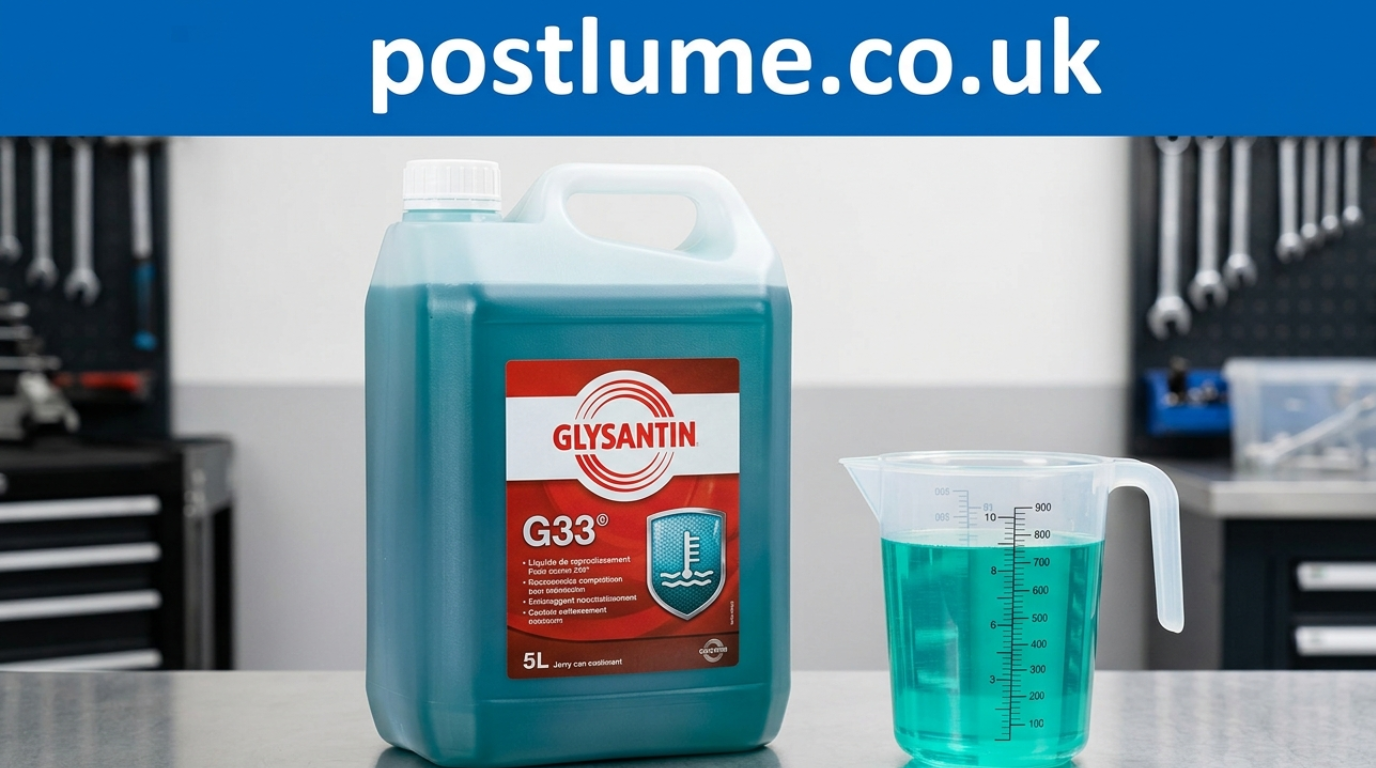
Glysantin G33 is a modern automotive engine coolant designed to protect engines from overheating, corrosion, and freezing under extreme conditions. It is part of the well-known Glysantin coolant family, which is manufactured by BASF and widely used by major car manufacturers. Many drivers search for “Glysantin G33” when they see it mentioned in vehicle manuals or coolant specifications and want to understand what makes it different from other antifreeze types.
This coolant is especially important for modern vehicles that use aluminum-heavy engines and advanced cooling systems. It is designed to meet strict manufacturer standards, particularly for European vehicles. Understanding Glysantin G33 helps car owners choose the correct coolant and avoid mixing incompatible fluids that could damage the engine.
What Is Glysantin G33 and How It Works
Glysantin G33 is an ethylene glycol-based engine coolant formulated using Organic Acid Technology (OAT). This means it uses organic corrosion inhibitors instead of older silicate-based additives. According to technical product data, it is silicate-free and designed for long-life protection in modern engines.
The coolant works by circulating through the engine and radiator, absorbing heat and transferring it away from critical components. At the same time, it forms a protective layer on metal surfaces to prevent rust, corrosion, and scale buildup. This dual function makes it essential for maintaining engine efficiency and durability.
Technical Properties and Performance of Glysantin G33
Glysantin G33 offers strong thermal stability and long service life, making it suitable for modern passenger vehicles. It is typically mixed with water before use, and when properly diluted, it provides frost protection down to extremely low temperatures while also preventing overheating in summer conditions.
The coolant is also designed to last longer than traditional antifreeze types. In many applications, it can remain effective for several years without replacement, depending on manufacturer recommendations. This extended lifespan reduces maintenance frequency and helps improve long-term vehicle reliability.
Key Benefits of Glysantin G33 Coolant
One of the main advantages of Glysantin G33 is its advanced corrosion protection. It is specially formulated to protect aluminum, steel, and other metal components inside the engine cooling system. This is especially important in modern engines that use lightweight materials for efficiency.
Another benefit is its compatibility with high-performance cooling systems. It is engineered to handle higher operating temperatures, making it suitable for turbocharged and fuel-efficient engines. Its stability ensures consistent performance even under heavy driving conditions or long-distance travel.
Vehicle Compatibility and Manufacturer Use
Glysantin G33 is commonly used in vehicles from European manufacturers, especially those requiring PSA (Peugeot-Citroën) specifications. It is often recommended in models that require long-life OAT-based coolant systems. Many car manuals specifically mention it as factory fill coolant.
However, compatibility is extremely important. BASF, the manufacturer of Glysantin, clearly states that coolant technologies are not universally interchangeable and should not be mixed without proper guidance. Using the wrong type can reduce protection and damage the cooling system over time.
Difference Between G33 and Other Glysantin Coolants
Glysantin produces several coolant types such as G30, G40, G48, and G65, each designed for specific vehicle technologies. Compared to older formulas, G33 represents a modern OAT-based solution with improved longevity and corrosion resistance.
Unlike hybrid or silicate-containing coolants, G33 focuses on long-term stability without forming deposits inside the system. However, because different coolant technologies are not compatible, mixing G33 with other types like G11 or G12 is not recommended. This is an important factor when performing coolant top-ups or replacements.
Mixing and Replacement Guidelines for Glysantin G33
One of the most important rules for Glysantin G33 is that it should not be mixed with incompatible coolant types. Mixing different technologies can lead to chemical reactions that reduce cooling efficiency and increase corrosion risk. This is why manufacturers strongly recommend using only the approved coolant type for each vehicle.
If a coolant change is needed, the system should be fully drained and flushed before refilling. This ensures that no old fluid remains in the system, allowing the new G33 coolant to perform as intended. Following proper replacement procedures helps maintain engine health and prevents long-term damage.
Common Problems and Misuse of Engine Coolants
One common issue with engine coolants is incorrect mixing due to misunderstanding color codes. Many drivers assume coolant color indicates type, but this is not reliable. Different manufacturers may use similar colors for completely different chemical formulations.
Another problem is using universal or cheap coolants that do not meet manufacturer specifications. While they may seem cost-effective, they often lack the advanced additives needed for modern engines. This can lead to overheating, corrosion, or reduced engine lifespan over time.
Safety, Environmental Impact, and Handling
Glysantin G33 is based on ethylene glycol, which requires careful handling because it can be harmful if ingested. It should always be stored securely and kept away from children and animals. Proper disposal is also important to protect the environment.
From an environmental perspective, modern coolants like G33 are designed to be more efficient and longer-lasting, reducing waste over time. However, they must still be disposed of at approved recycling or waste collection facilities to avoid contamination.
Conclusion: Why Glysantin G33 Matters for Modern Engines
Glysantin G33 is a high-performance coolant designed for modern vehicles that require reliable thermal management and long-term engine protection. Its advanced OAT technology makes it effective in preventing corrosion, overheating, and system wear.
For car owners, understanding the correct use of Glysantin G33 is essential for maintaining engine health. By following manufacturer guidelines and avoiding incorrect mixing, drivers can ensure optimal performance and extend the life of their vehicles.
